
 The National Congress, Brasilia, Brazil. In dire need of a good clean up, and not only outside…
Men At Work
2
The National Congress, Brasilia, Brazil. In dire need of a good clean up, and not only outside…


If you love architecture and Art Deco, you’ll LOVE the Chrysler Building, on the East Side of Midtown Manhattan, in New York City. The Chrysler was designed by architect William Van Alen and completed in1930. The Art Deco ornamentation at the crown of the Chrysler is considered a masterpiece of Art Deco architecture. It is based on features used on Chrysler automobiles. On the 31st floor, the corner ornamentations are replicas of the 1929 Chrysler radiator caps. The corners of the 61st floor are graced with eagles, replicas of the 1929 Chrysler hood ornaments.
Another outstanding feature of the Chrysler building is its terraced crown, composed of seven radiating terraced arches. The entire crown is clad with stainless steel. The flush windows, the stainless steel crown, the spire, and the eagles were all fabricated from sheet metal shops on the 65th and 67th floor. Unlike other buildings, the Chrysler was virtually sculpted by hand. A true work of art. I think it is the most beautiful building in New York and perhaps the world, although I haven’t seen all the buildings in the world…
So, given my strong admiration for The Chrysler, when I was in New York this past summer I decided to photograph it up close, which proved to be VERY difficult. The massive structure is squeezed between other buildings and so tall that standing across the street from it won’t allow you to shoot its whole extension. You can get the building but not its beautiful crown. And when you get the crown, you cut half of the building. That’s why I decided to photograph it in parts. I also didn’t have my 300mm lens with me on that trip so I wasn’t able to get some of the details as I would have liked. C’est la vie! I still owe it to myself a decent set of pics of The Chrysler, which shall happen the next time I’m in the Big Apple.
I’ve been playing with photoshop filters and just loved this effect, using the “Negative” filter from the “Photographic Effects” set.
And here’s the original, which I thought had lots of competing elements –lines, shapes, texture and shadows. The filtered version highlights shapes and lines while keeping texture and shadows in a supportive role. Agree?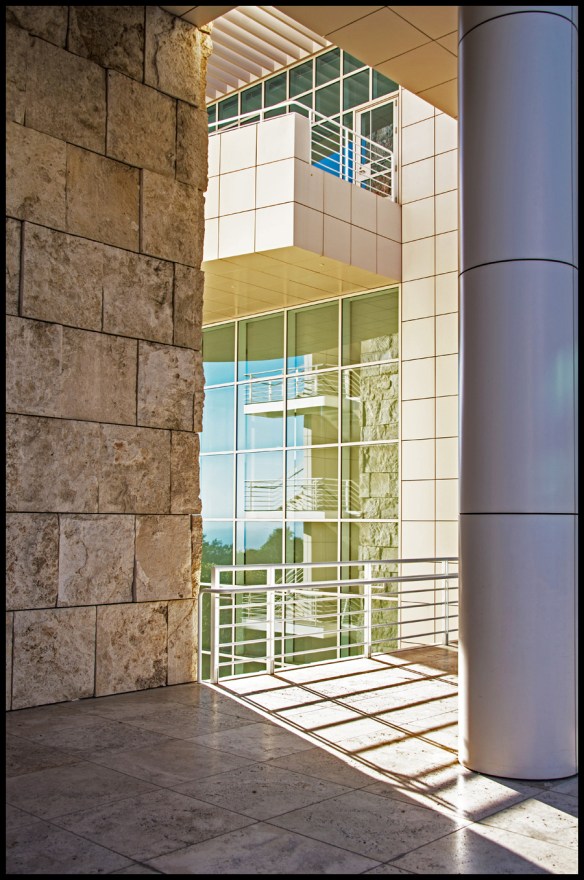
Photo taken at the Getty Center, Los Angeles, CA.


Last week I took advantage of the fact that I had to be downtown to also visit and photograph a few of LA’s landmarks. The Cathedral of Our Lady of the Angels was one of them.
In 1996, renowned Spanish architect José Rafael Moneo was commissioned to design a new cathedral for Los Angeles to replace the Cathedral of Saint Vibiana, severely damaged during the 1994 earthquake. The fact that the 5.6 acre site overlooked the Hollywood Freeway did not deter Moneo. Just as many European Cathedrals are built near rivers, Moneo considered the freeway as Los Angeles’ river of transportation, the connection of people to each other.
Using elements of postmodern architecture, the church and the Cathedral Center feature a series of acute and obtuse angles while avoiding right angles. The tapestries that adorn the cathedral walls were created by artist John Nava. This is the largest collection hanging in a Catholic place of worship in the United States. The “Communion of Saints” consists of females and males of all ages, races, occupations and vocations the world over. Saints from the Renaissance period are intermingled with people from the 1st century and the 20th century.
The cathedral was almost empty and very quiet when I visited. I wonder what it’s like to be there for mass when it’s filled to capacity, on Christmas, Easter, and other holidays.
“Oculus,” is a giant white metal structure that houses the new World Trade Center Transportation Hub and a huge Westfield mall. Its creator, Spanish neofuturistic architect Santiago Calatrava, wanted the structure to look like a bird being released from a child’s hands. The complex has a train station with a large and open mezzanine under the National September 11 Memorial plaza. This mezzanine is connected to an aboveground structure –the Oculus– located between 2 World Trade Center and 3 World Trade Center—as well as to public concourses under the various towers in the World Trade Center complex. The building has become a major tourist attraction and the space is very pleasant, with great shops, and the “Eataly,” on the third floor of the Mall, is a good option for quick meals, coffee, drinks, and even some food/home shopping. I wish I had more time to explore the whole complex, but that will have to wait for another time… Here are some images of Oculus.


In this Architecture challenge, Cee asks us to share whatever types of buildings appeal to us. I am a huge fan of architectural photography and of contemporary architecture. I love exciting, unconventional buildings (that’s why Los Angeles-based Frank Gehry is my favorite architect), but I also appreciate other styles. Here some favorites from California and Chicago. Some are quirky… 🙂
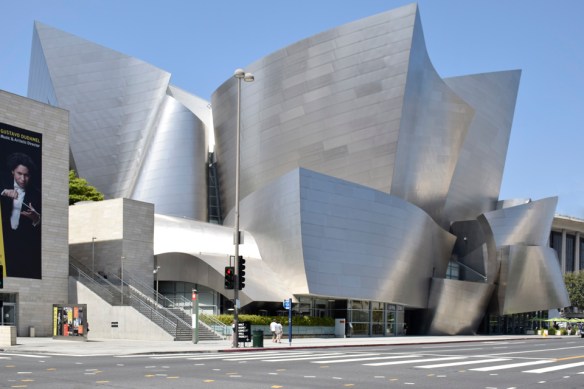
Walt Disney Concert Hall, Los Angeles, CA. “Deconstructivist” style building. Architect: Frank Gehry, 2003.

Santa Barbara Courthouse, Santa Barbara, CA. Spanish Colonial Revival style building. Architect: William Mooser III (1929).

The Chicago Tribune Tower, Chicago, IL. Neo-Gothic style building. Architects: John M. Howells and Raymond Hood (1925).
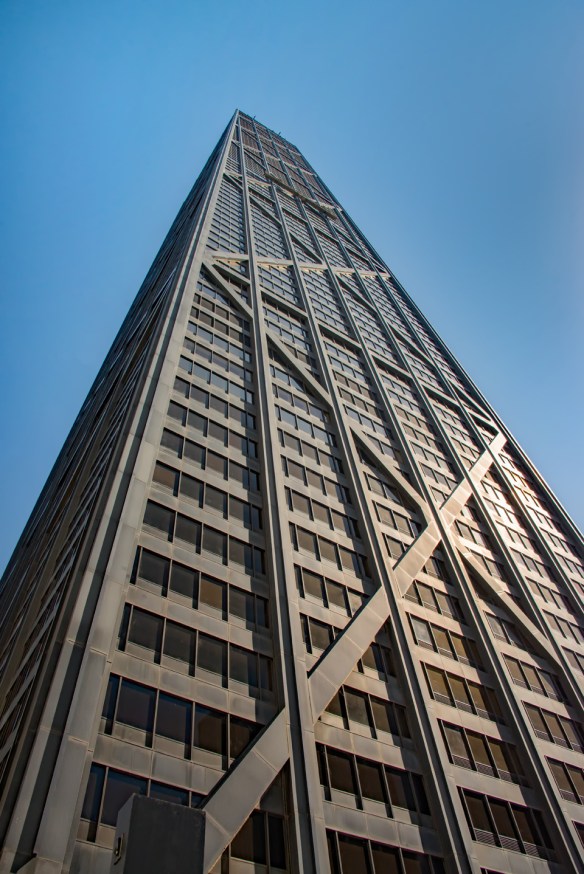
The John Hancock Center, Chicago, IL. Structural Expressionist style building. Architects: Fazlur Khan and Bruce Graham (1969).
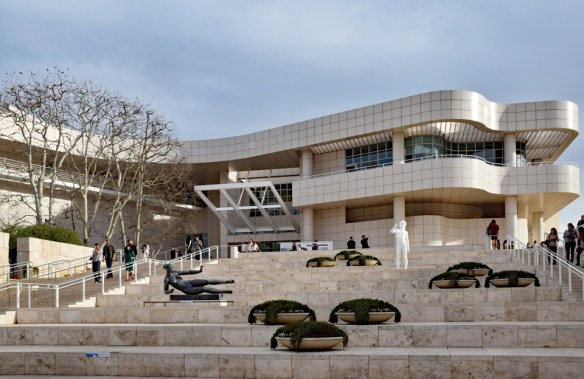
The Getty Center, Los Angeles, CA. Modernist style building. Architects: Richard Meier and Michael Palladino (1997).
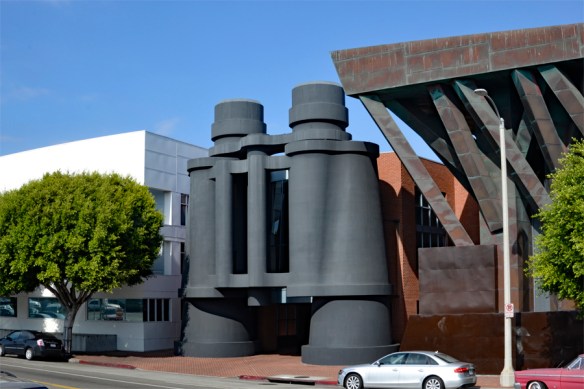
The Binoculars Building (Google’s offices in LA), Venice Beach, Los Angeles, CA. Postmodern style building. Architect: Frank Gehry (1991)

Union Station, Los Angeles, CA. Combined Modern, Art Deco, Mission/Spanish Revival style building. Architects: Johan and Donal Parkinson (1939).
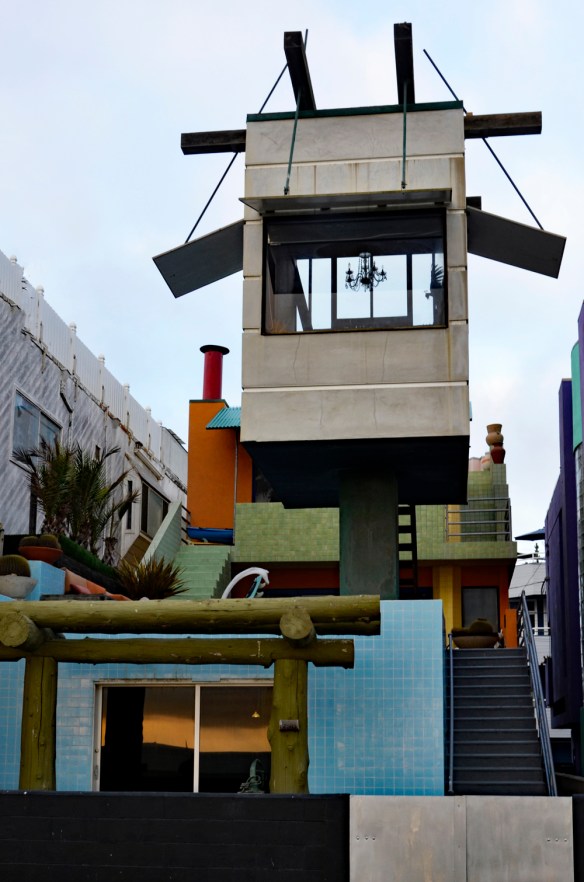
The Norton House, Venice Beach, Los Angeles, CA. Post Modern style beach house. A special feature is the office or the “lookout” tower up front, facing the ocean. It is very reminiscent of the lifeguard huts found along the beach. Architect: Frank Gehry (1986).
The Petersen Museum: Love It or Leave It
L.A.’s Petersen Automotive Museum reopened in December of 2015, after undergoing extensive remodeling. The new building, designed by Kohn Pedersen Fox (who also worked on New York’s MOMA), is a textured hot-rod-red aluminum structure wrapped by hundreds of stainless-steel ribbons, meant to “evoke the imagery of speed and the organic curves of a coach-built automobile.” But many critics in L.A. are calling it a huge eye-sore, an obnoxious, loud, and tacky Las Vegas-style monstrosity. Will the public hate it or embrace it? One thing is for sure: once you’ve seen it, you will never forget it.


The interior is impressive with twenty-five galleries on three floors, packed with interactive technology telling three stories about the automobile: its history, its industry and its artistry. I enjoyed the time I spent there. The cars on display are simply jaw-dropping beautiful and for car lovers, there is a special tour to the museum’s vault, where they keep hundreds of car intended to be display at times in different exhibits.
I See Shapes Everywhere~~

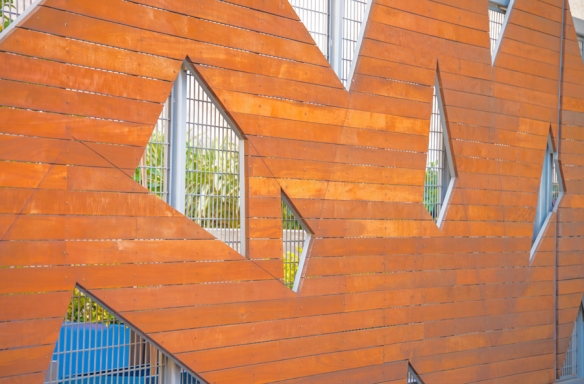
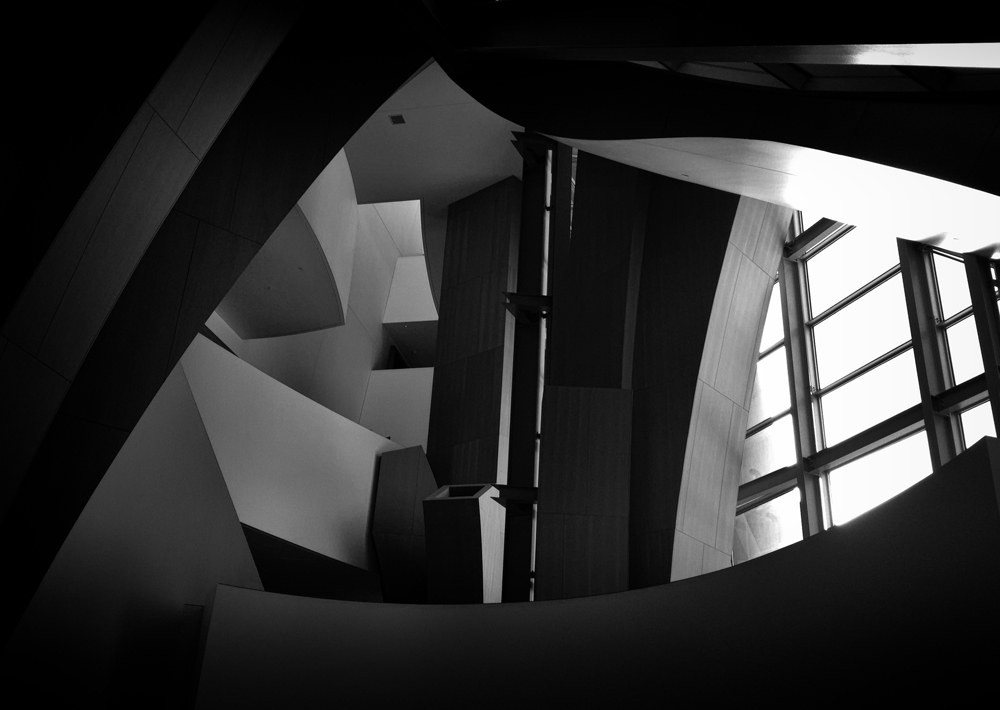
Architectural Abstract in B&W ~~
Everything in this architectural piece reminds me of Picasso.
Frank Gehry Masterpieces~~
Frank Gehry, my favorite architect in the world, is a Canadian-born American architect who calls Los Angeles home. A number of his buildings, including his private residence in Santa Monica, and his most famous designs, the Walt Disney Concert Hall in Lost Angeles and the Guggenheim Museum in Bilbao, Spain, have become world-renowned attractions. Gehry’s recent and ongoing projects include a new Guggenheim facility in Abu Dhabi, the new Facebook headquarters in California, and a memorial to Dwight D. Eisenhower in Washington, D.C., slated to be constructed at the foot of Capitol Hill. This month, the Los Angeles County Museum of Art (LACMA) has a special exhibit of Gehry’s body of work from the early 1960s—when he established his firm in Los Angeles—to the present, including his current work. I went to see it and, as always, was mesmerized by Gehry’s genius. He is more than an architect: he is an artist. His buildings are gigantic sculptures and, while not for everyone’s taste, they are at very least impressive. I am a huge fan and have photographed several of his buildings around L.A. and in other places. I’ll share some of them here along with their respective models, which are featured in the exhibit.


Jane Lurie Photography
Less is not enough.
photography, poetry, paintings
And then I stop and sit and eat.
Jy is wat jy dink - nie wat jy dink jy is nie. Dit help soms om hardop te lag vir wat jy dink of dink jy is.
To See a World in a Grain of Sand...
Creative Exploration in Words and Pictures
One Photo, One Story at a Time
Street | Urban | Travel | Photography by Marcus Puschmann
Focus Hocus Pocus
Fun, Photography & Friends
capturing memories one moment at a time
Sharing a world of joy with photos and words
Gardens Plants Travel
Photography at its most candid
by Neil Williamson
A photographer's view of the world - words and images to inspire your travels and your dreams
Fotografía y algo más...
Wildlife photography along the urban edge
Colouring by touch : altering by thought : fed by feeding.
A daily selection of the best content published on WordPress, collected for you by humans who love to read.
sharing photographs, poetry, and random thoughts
Travel blog about the amazing places I have been and those that I would still love to visit.
My experiences in Italy and the world
Somewhere to play with image styles
An exploration in human being after decades of human doing.
Notes on Seeing, Reading & Writing, Living & Loving in The North
life, the universe and everything - in pictures
photographs on the street
Chris is an amateur photographer and blogger who just wanders around with a smartphone taking photos
The secret to having it all is believing that you do!
Documentary Photography, Street Photography, Photo Reportage, Black and White, film,
Words and Pictures from the Middle East
Adventures in Photography
If you aren't living on the edge, you're taking up too much space
 Shoot 'N Go